Saturday, 7 February 2015

The Kyoto Kaleidoscope: 4 - 7 February 2015


Kyoto has often been described as the 'heart and soul' of Japan. Full of cultural heritage, Kyoto boasts almost 2000 Buddhist and Shinto shrines. Rich textures of twelve centuries surround you in this city; from the centuries old feel of the Gion quarter to the quiet cobblestone backstreets lined with traditional wooden houses found near the Philosopher's Walk. It is certainly a city that could captivate any audience... We had a ball here!

We arrived in the evening and made our way by bus to the Gran MS Kyoto Hotel in downtown Kyoto (we would easily have won that heat in an Amazing Race episode!) Our little 4 x 6 room was perfectly located to explore the city; close enough to walk or cycle to the main sightseeing places yet quiet enough to sleep well. The room was dark due to the blacked out window - no matter what the time of day, it felt like the middle of the night (not such a bad thing as it led to well rested nights and many afternoon naps..!) 

We found the Nishiki Market that first night (a five block long shopping street lined with hundreds of shops and restaurants). For the first time we saw Takoyaki (octopus balls) being made and we bought some for 250 yen (~$2.50AUD). They weren't quite cooked well enough (still a little doughy) but the warmth was delightful on the cool night and the novelty of seeing them made was well worth the yen!

Pontocho is a narrow street along the river lined with atmospheric restaurants and bars. The next evening we walked through here to get to Gion Corner where we saw a Geisha quickly scurrying away (too quick for our paparazzi lenses). We were a little late to see the performances at Gion Corner so we made our way back to Pontocho where we ran into two Geisha in the narrow street before having dinner in a lovely little restaurant called Mimasu-ya overlooking the water. You wouldn't think the sizzling beef would win the pick of the lot, but its delicious sauce won hands down!

We hired Kyoto city bicycles and cycled around the various temples and shrines in Central Kyoto over the next two days. This was a lot of fun - we loved immersing ourselves in the culture and particularly liked the quiet sites best. We cycled our way through old cobblestoned streets, at one stage stumbling across a well placed coffee shop to rejuvenate, gaining the much needed energy to speed past tourist stores and dodge the at times busy traffic! 


On bikes we visited a number of place including:


Yasaka Pagoda
Kiyomizu Temple
Otani Mausoleum
Nanzenji Temple
Philosophers Walk
Ginkakuji Temple
Nijo-jo Castle
Kinkakuji (Golden) Temple      

We made our way back to Kyoto Station to take the bullet-train to Nagoya, onwards to Nagano and a then a bus to Hakuba, (our next destination!) 


Next issue:  The Hakuba Herald.


Kamogawa River - Kyoto

An evening stroll through Potoncho!


Restaurants lining the narrow walkways of Potoncho...

Decorative umbrellas 

Glow of lights lining Kyoto canals...

Hard to find Geishas in Potoncho... 

Sheep-pig taking a well deserved water break...!

And wondering who this guy is...!


Geishas in Gion - ? are these the same Geisha as the night before....
A welcomed well-timed discovery among the cobblestone streets!
Enjoying the brew and a 10 second timer...! 
Yasaka Pagoda
Gates of Kiyomizu Temple
Overlooking Kiyomizu Temple 

Sheep-pig "Say a prayer for me" - Amongst his flock, Kiyomizu Temple

Dragon fountain - Otani Mausoleum 

The best way to explore Kyoto...!

Memorial to samurai... 

Carls enjoying Maruyama Park...

Dry sand & rock 'Zen' garden - Ginkaku-ji Temple

Afternoon at Ginkaku-ji Temple

Stone footpath looking strangely like footsteps ? - Ginkaku-ji Temple

Crouching tiger hidden dragon moment in the bamboo...


Sheep-pig leading the way at the Nijo Castle gates

Nijo Castle

Inside the castle, re-enactment of how is once was...!
(PS: no photo's allowed)

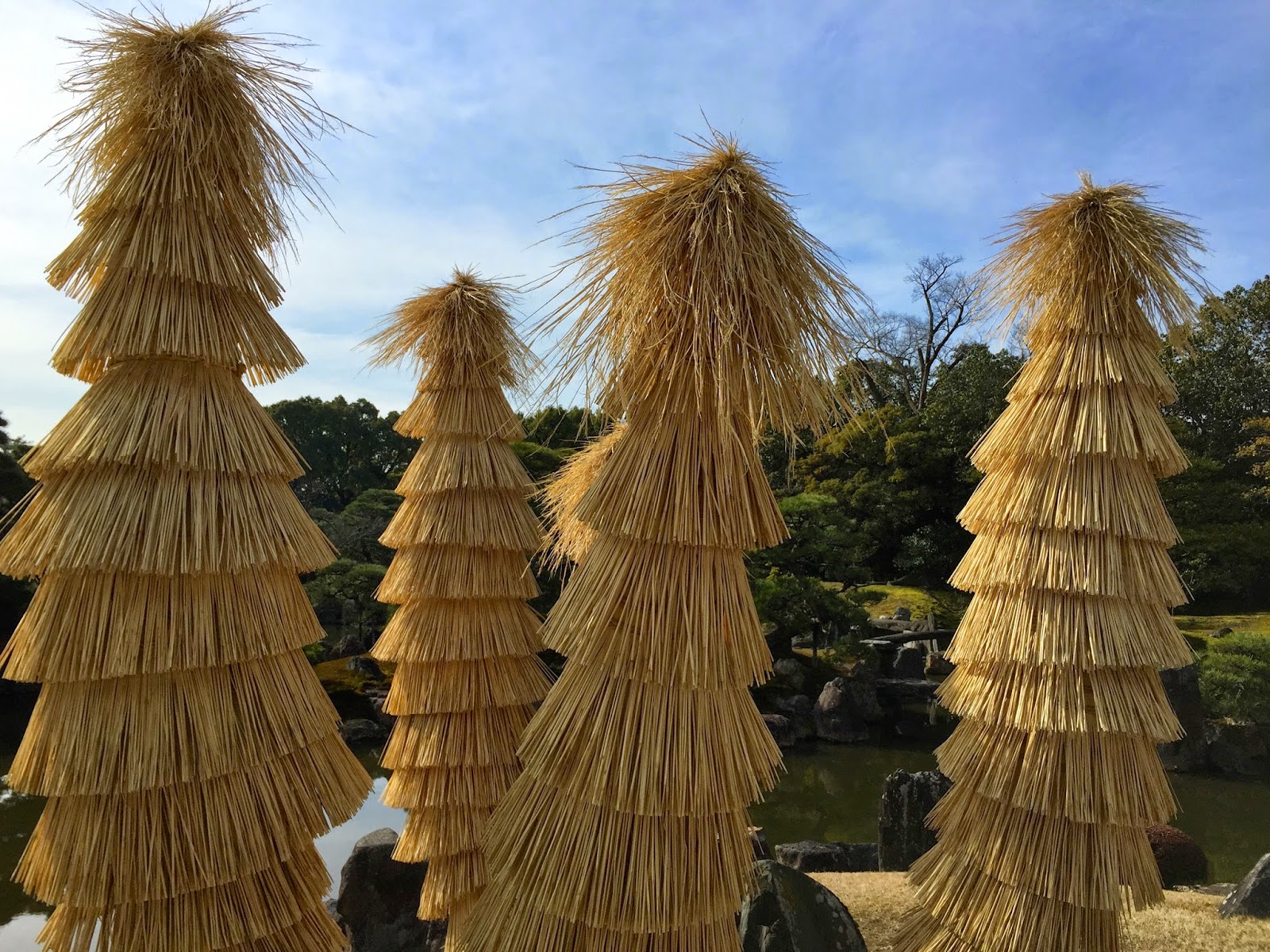
How to keep the trees protected and warm in Winter...

Nijo Castle gates - abstract!

Picturesque Nijo Castle grounds...

Rudes trying to perfect the look back over the shoulder pose now popular in Japan...!

More Nijo Castle gates... No you shall not pass!

Nijo Castle grounds - very pretty!

Golden Pavilion / Kinkakuji Temple

Carls adding yet another incense stick  - Kinkakuji Temple

Tuesday, 3 February 2015

The Hiroshima Herald: 2 - 4 February 2015


At 8:15AM on August 6, 1945, the city of Hiroshima fell victim to the world's first atomic bombing. The entire city was virtually levelled; thousands upon thousands of lives were lost, with estimates of up to 140,000 deaths by the end of 1945.

Hiroshima is one of those places I'd never imagined I'd have the opportunity to see. I first read about Hiroshima in a book titled 'Sadako and the Thousand Paper Cranes'This book is based on the true story of Sadako Sasaki, who was two years old when the atomic bomb was dropped on Hiroshima. Ten years later she was diagnosed with leukemia as a result of the radiation.  Following hospitalisation, Sadako spent her time folding origami paper cranes hoping to make a thousand of them. She was inspired to do so by the Japanese legend that grants a wish to anyone who has created a thousand origami cranes. Her wish was simply to live. 

Unfortunately Sadako's wish did not come true. Following her death in October 1955, Sadako's friends and schoolmates published a collection of letters in order to raise funds to build a memorial in her honour and for all of the children who had died from the effects of the atomic bomb.  In 1958, a statue of Sadako holding a golden crane was installed in the Hiroshima Peace Park. At the foot of the statue is a plaque that reads: "This is our cry. This is our prayer. Peace on Earth". 

Rudy and I arrived in Hiroshima late in the evening on the Shinkansen from Tokyo. Despite arriving late the restaurants were still open - our favourite restaurant during our stay was a place called Okkundou Mazemen (open until 3am), which served Japanese pasta noodles with spring onions / leek / pork / a soft boiled egg / seven secret spices and grated sesame seeds!

We explored Hiroshima over a full day and began with a walk through the Hiroshima Peace Park. We really liked the statue entitled "Mother and Child in Storm". This statue shows a mother protecting her children, 'symbolising love so powerful that it endures suffering and overcomes grief'. From there we walked through the Hiroshima Peace Memorial Museum. The Museum collects and displays belongings left by the victims, photos and other materials that convey the horror of the devastating and despicable event.  We listened to audio as we walked through the museum and were both deeply saddened, especially by the individual stories of children whose lives were taken so tragically and horrifically. 

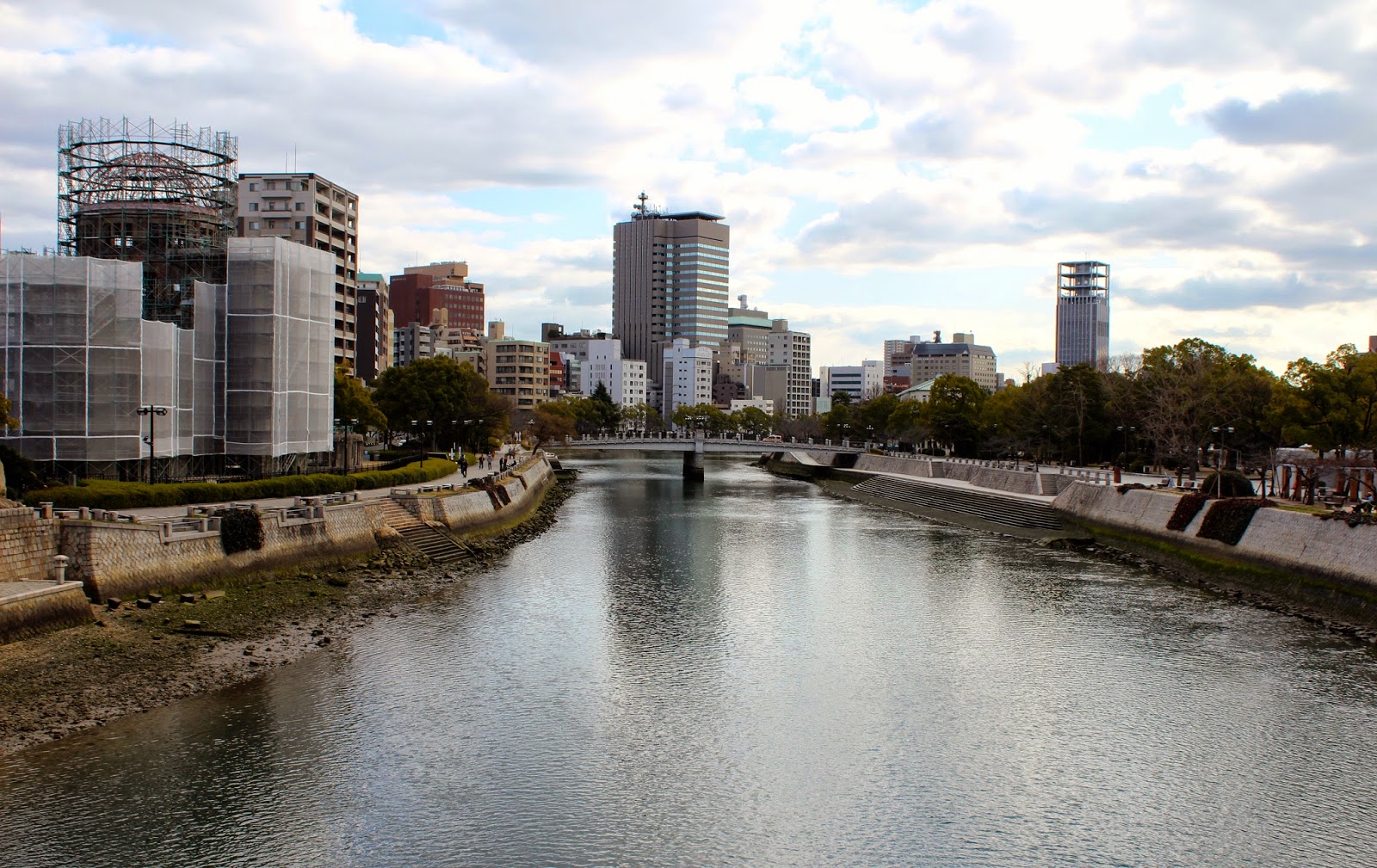
We then continued our walk through the park stopping at the Cenotaph, the Hiroshima Hall of Remembrance, the Children's Peace Monument, the Peace Bell (which we both rung a number of times) and the A-Dome, (which was behind scaffolding but understood that it needed restoration for it to be preserved for future generations). 

Hiroshima Castle
After some hot udon noodles and some sushi triangles, we continued our sight-seeing of Hiroshima and walked through the outer gates to Hiroshima Castle.

The area of Hiroshima (previously known as Gokamura – “five villages”) was initially settled way back in the day due to its location and rich soils that surrounded the delta of the Otagawa River and its tributaries. 

Two clans prospered over time and eventually under feudal Japan one became the ruling family.  By the 1590’s the Mori clan chose to build the castle due to the strategic location and because the river system could afford the castle great natural barriers.

In particular they built three concentric moats on progressively higher banks around the Castle so that water could be released from higher levels to flood the lower levels should an enemy get closer than anticipated.  The castle was completed by the late 1590’s but the Mori clan would not enjoy it for long.

In 1600, the Mori clan was ousted by the iconic battle of Sekigahara. A very historic battle and pivot in time for Japan. Fukashima reigned the castle for 16 years after that battle, but due to repairing the castle from flood damage without the consent of the Tokogawa Shogunate in Edo in 1619, was banished and replaced by the Asano.  They would reign over the castle and prefecture for 250 years until the Meiji restoration (1869).

After 1869 the castle became a military base for Japan until it was destroyed by the A-Bomb dropped in 1945.  Thankfully it was rebuilt by 1958 to near its former glory and serves today as a museum to pre WWII Japan. 

Thank you Hiroshima for allowing us to pay our respects.  We think you are an amazing city… now to visit another Japanese jewel – Kyoto.


Next issue: Kyoto Kronicle. 

Mother shielding children from A-Bomb blast


3yo boy's bike and helmet exhumed 40 years after A-Bomb

Black Rain - After A-Bomb blast

Sadako's 1000 paper cranes inspiration


Hiroshima's Cenotaph Memorial (A-Dome in background)

Rivers around Hiroshima Peace Park

A-Dome (being preserved)

A-Dome was one of the few buildings to survive the blast (92% were destroyed)

Outer gate to Hiroshima Castle


Hiroshima Castle


Our favourite restaurant during our stay in Hiroshima - Okkundou Mazamen


Sheep-pig first in line for the Non-Reserved seating - Shinkansen Hiroshima to Kyoto


Monday, 2 February 2015

Singa'poor' Airlines... Not for me! 1 - 2 February 2015


Who says I have to travel 'cattle' class to Tokyo..! That's for Carla & Rudy, not me. Plenty of leg room!
'Has anyone seen my luggage?' - Sheep-pig at Tokyo Airport

Rudy searched far and wide for Streamers Coffee (after seeing it advertised in an EnZed magazine) 

It was worth the search..! 

Add another 2 to the Shibuya Crossing - Shibuya, Tokyo